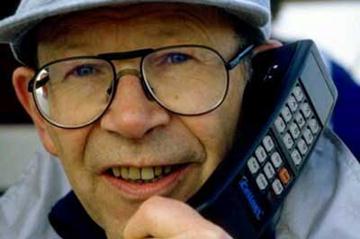
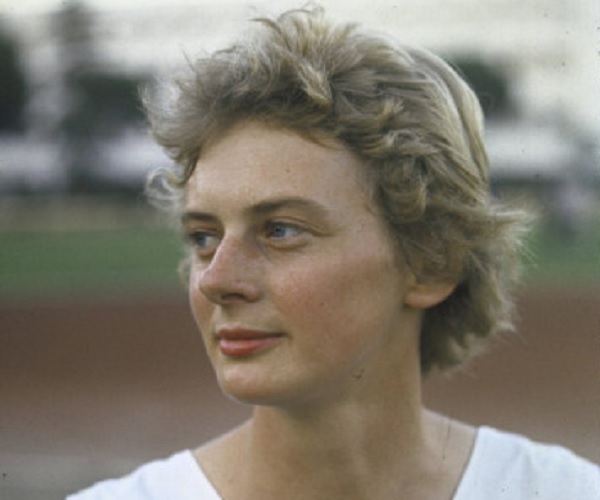
It took Christopher Brasher 8 minutes and 41.2 seconds to finish first in the Olympic 3000 meters steeplechase finals. But to get to the top of the podium, he had to endure more than three hours of waiting. The dramatic race on the afternoon of November 29th, 1956, at Melbourne Cricket Ground was surrounded by controversy and had long repercussions.
On the first view, everything seemed crystal clear: Brasher, not a steeplechase specialist, had edged out Hungary's European champion and world record holder Sandor Rozsnoyi on the home stretch to capture a surprising gold. But suddenly Brasher was disqualified, allegedly for having interferred with Norway's bronze medal winner Ernst Larsen at the beginning of the final lap. But when Larsen declared, in a great showing of sportsmanship, that Brasher had touched him, but without hindering his running, Brasher was reinstated. He celebrated this with a “liquid lunch“ with some journalists and stood on top of the podium, as he confessed later, “blind drunk, totally blotto”.
The film of the scene (courtesy of onlinefootage.tv) cannot clarify what happened without a doubt, but after long discussions, the result stood (picture: Getty).
For Brasher, the gold medal was the climax of a colourful life and athletics career. Born in British Guyana in 1928, he had lived in Jerusalem for some time, before returning to merry old England and attending the famous Rugby and St. John's College in Cambridge. He picked up track and field in 1950. Until the Melbourne Games, his most notorious achievement had been his support as a pacemaker for Roger Bannister when he broke the four-minute barrier in the mile race in 1954.
After Melbourne, Brasher immediately retired, but was still an omnipresent figure in the athletics scene until his death in 2003. "Bloody" Brasher worked as a journalist for The Observer and the BBC. In the 1980s, he became one of the founding fathers of the London marathon (picture: IAAF).
News of the day: Charles Jenkins (USA) wins the 400 meters ahead of Germany's Karl-Friedrich Haas. +++ Another surprising gold medal for Great Britain is fencer Gillian Sheen's triumph in the women's foil event.
Blonde hair, a wild stride with highly lifted knees, and - most of all - a wide open mouth. These were the trademarks of the biggest female star of the Melbourne Olympics. On Monday, November 26th, Betty Curhbert took home the first of her three gold medals in the sprint - at the age of just 18 (pictures: The Australian, The Famous People).
The Australian fans had had high expectations for the women's track events, but they did not really have the "Golden Girl" from Sydney on their minds. Shirley de la Hunty was expected to be the star of the Games. She indeed defended her title in the 80 meters hurdles, but before that, she had bowed out in the heats of the 100 meters dash. It was a shocking moment for hometown fans, all the more as Cuthbert was considered to be a 200 meters specialist. In this event, she had set a new world record at 23.2 seconds two months before the Games.
But with Strickland sidelined, Cuthbert rose to the occasion, holding off East Germany's Christa Stubnick and teammate Marlene Matthews to capture the gold. Three days later in the 200, the outcome was the same. When Cuthbert anchored her team's relay team to the gold, her status as a natonal heroine was secured. All of her running with that typically wide opened mouth, about which Cuthbert used to say: "Everything I did that required effort, I opened my mouth. Even to catch a ball, I opened my mouth."
The hype that followed was a little to much for a shy and slightly build 18 year old. Cuthbert indeed had no easy time in the years to follow. Hampered by a hamstring injury, she was eliminated in the heas at the 1960 Rome Olympics and retired. Two years later, Cuthbert had a terific comeback, winning the Commonwealth title in the 400 meters. At the same distance, she crowned her career with a fourth Olympic gold in 1964 at the Tokyo Games(picture: ABC).
A fighter that she had been on the track, Cuthbert also was in her later life. In 1974, she was diagnosed with multiple sclerosis that forced her into a wheelchair. But that did not prevent her from carrying the Olympic torch into Stadium Australia at the opening ceremony of the 2000 Sydney Games, showing off her trademark optimism and perseverance. It was one of many memorable moments of the Millennium Olympics (picture: The Australian).
News of the day: Bob Richards (USA) defends his pole vault title, Tom Courteney (USA) gets the 800 meters gold. +++ Norway's Eigil Daniels wins the javelin throw with a new world record of 85.71 meters. +++ The USA and the USSR continue there weightlifting domination: Tommy Kono (USA/Light heavyweight), Arkadi Vorobiov (USSR/Middle heavyweight), and the "Tennessee Titan" Paul Anderson (USA/Heavyweight) win the last three golds. +++ Fencer Christian d'Oriola of France repeats his win in the individual foil competition.
The story of a hammer thrower winning Olympic gold with a crippled arm would have been enough to make tabloid headlines. But there was even more to the triumph of Harold Connolly at Melbourne. Love was in the air - a love that was stronger than Cold War borders.
When Harold Connolly won the gold on the afternoon of Saturday, November 24th, 1956, he did so against all odds. Following several childhood injuries, his right arm was nine centimeters shorter than his left, preventing Connolly from becoming a professional boxer as he had hoped for. But the handicap raised his fighting spirit: "I was a handicapped person who knows the agony of all-out trying and not accomplishing. They didn’t treat the disabled with dignity then. I couldn’t stand to be treated differently."
Instead, the man from Massachussets turned to hammer throwing. In his career, he broke the world record six times and in 1960 became the first man to throw the hammer over the 70 meters line. In Melbourne, he defeated the Soviet favourites Mikhail Krivonossov and Anatoli Samozvetov with a throw of 63.19 meters (picture: hmmrmedia).
But Connolly had more than gold on his mind.
In the week before the Games, he had met Czech discus thrower Olga Fikotová in the Olympic village. Fikotová won the gold 24 hours before Connolly's triumph. They fell in love immediately, accompanied by a lot of fanfare in the western media. The fact that the couple-to-be lived on different sides of the Iron Curtain added to the drama. Three months after the Olympics, Connolly proposed to Fikotová in Prague. After the Czech president had given his permission, they married in October 1957 with 30,000 well-whishers looking on(pictures: UCI/Getty).
"The H-bomb overhangs us like a cloud of doom. The subway during rush hours is almost impossible to endure," The New York Times wrote on the day after their marriage. "But Olga and Harold are in love, and the world does not say no to them." From then on, the Connollys were regular guests in American TV and papers and had a son. But the honeymoon did not last forever. The marriage was divorced in 1974. What remained were two Olympic gold medals and the feel-good story of Melbourne. Connolly, who in 1983 had admitted the use of anabolic steroid during his athletic career, died in August 2010, aged 79.
News of the day: Bobby Morrow (USA) becomes the fastest man on earth, winning the 100 meters dash ahead of fellow American Thane Baker and Australia's Hector Hogan +++ Further athletics gold go to Glenn Davis (USA) in the 400 meters hurdles, Norman Read (New Zealand) in the 50 km race walk, and Greg Bell (USA) in the long jump. +++ The first two golds for the USSR are won by weightlifters Igor Rybak (Light weight) and Fiodor Bogdanovski (Middle weight).
Notice: On November 25th, 1956, no competitions were held due to Sunday sports restrictions. Our next post comes to you on November 26th.
It had been labelled as one of the great duels of the Games and so it was. On the early evening of Friday, November 23rd, Soviet runner Vladimir Kuts and Great Britain's Gordon Pirie squared off in the 10,000 meters final and delivered a race for the ages. In the end, Kuts took home the gold with Pirie finishing merely eighth - but the duel had been much closer as the result seemed to indicate (picture: racingpast.ca).
Kuts had won the 5000 meters at the 1954 European Championships in Berne, Switzerland, spoiling the anticipated showdown between Emil Zatopek bad Christopher Chataway. Pirie had clocked a new 10,000 meters world record in Bergen, Norway in the summer before the Melbourne Games. With Hungary's Sandor Iharos out after the revolution back home, the stage was set for Kuts versus Pirie.
As expected, the race - starting at 6:00 PM on the sandy track at Melbourne Cricket Ground - became the classical encounter between a frontrunner and a finisher. Kuts led from the beginning, trying to destroy his opponents with continuing intervals of acceleration and slowing down, while Pirie followed in his footsteps. This continued for 21 of the 25 laps, until both runners had virtually run out of gas, which even Kuts admitted later. But the 29 year old navy officer from the Ukraine had one last sprint left in his tank. While Kuts raced to gold seven seconds ahead of Hungary's Jozsef Kovacs and Allan Lawrence of Australia, Pirie dropped back to a disappointing eighth place.
"He murdered me - that's all there was to it", Pirie later told the home press, who put him under crossfire. Meanwhile, Kuts sent his coach Grigorij Nikiforov to talk the media, while giving an exclusive interview to his wife Raissa, who worked as a journalist. The man who was often criticized as a "race robot" and was later even connected to doping allegations by the flamboyant Pirie, was in fact no one-dimensional race horse, but a great tactician with unprecedented stamina. Kuts proved all his critics wrong five days later when he also won the 5000 meters. In this race, Pirie finished second.
News of the day: Charles Dumas (USA) grabs the gold in the men's high jump, while Czech Olga Fikotová wins the women's discus throw +++ Americans Charles Vinci (bantam weight) and Isaac Berger (feather weight) earn the first two golds in weightlifting +++ The fencing team from Italy becomes Olympic champion with the men's foil.
Some of the greatest athletes of the world have tried in vain to win an Olympic gold medal. We portray them in this series.
Olympic gold has eluded many athletes, but probably none in such a dramatic fashion as Mary Decker-Slaney. Her collision with Zola Budd in the 3000 meters final at the 1984 Los Angeles Olympics had the proportion of a Shakespearean tragedy. It was not just bad luck of a stellar athlete. On this Friday afternoon, August 10th, 1984, America's sweetheart, everybody's darling (especially the media's) had fallen from grace (picture: The Guardian).
To understand the whole drama, one has to remember the buildup. As perfectly portrayed in the ESPN documentary "Runner", Mary Decker had risen to stardom in running-mad America for years. She participated in her first marathon at the age of twelve, took the spotlight in the late 1970s and was tabbed by the media to become the world's best and surely most popular female athlete. But bad look became a steady companion for Decker. In later years, many injurys hampered her career. In 1980, she won the 1500 meters at the U. S. Olympic trials, but the boycott prevented her from perhaps picking up the gold in Moscow.
Nevertheless, the rise of Mary Decker-Slaney continued, culminating at the inaugral World Championships in 1983 at Helsinki, where she smashed the Soviet runners and won the gold both in the 1500 and 3000 meters. One year earlier, Sports Illustrated (picture) had put the world record holder on the cover - Decker had become a "hot commodity".
The much hyped and anticipated duel lasted only a few laps. Then Decker-Slaney hit the heel of barefoot running Budd and stumbled to the ground. While America's TV audience watched in shock and Decker-Slaney sat crying beside the track, the race continued and Romania's Maricica Puica grabbed the gold with a totally unnerved Budd finishing merely seventh (picture: UK Sports Chat).
Decker first blamed Budd for her own failure, the British runner was disqualified, but shortly after reinstated. Anyway, everybody knew that on this day Decker-Slaney's best shot at an Olympic gold had gone for good. She never even came close to another. Four years later in Seoul, Decker-Slaney finished eighth in the 1500 and tenth in the 3000 meters final. At the 1996 Atlanta Games, she did not make it past the 5000 meters heats.
Some countries have won just one single gold medal in their Olympic history. We portray them in our series "The One and Only". One of them: Ecuador.
Jefferson Perez is just 1.67 meters tall, but to his countrymen, he is the greatest. On the early morning of Friday, July 26th, 1996, Perez became the first and to date only Olympic champion from Ecuador, winning the 20 kilometers race walk at the Atlanta Summer Games (picture: iaaf.org).
Perez had dominated the race from the beginning, but it came at a high prize. "The shoe on my left foot was split in half and almost without a sole", Perez remembered 20 years later in an interview with Ecuadorian daily El Comercio. One kilometer away from the finish line, Perez finally got away from Russian Ilya Markov and Mexican Bernardo Segura and won the Gold by a margin of nine and 16 seconds.
When Perez entered the stadium, "It was a spiritual moment, I was in deep silence. I am Catholic and at the stadium gate I imagined Christ." At the same time, Ecuador was anything but silent. The whole country erupted with joy over her first ever Olympic Gold.
The career of Jefferson Perez had seen a lot of ups and downs and so it went on after Atlanta. At age 22, he was rather young for a race walker to become an Olympic champion. Perez had learned a lot from the Mexican race walkers and their coaches when he went to the country thanks to a scholarship in 1989. He won his first major international title at the 1995 Pan American Games in Mar del Plata. After this triumph, Perez wanted to build a new house for his mother in his hometown of Cuenca. "All the resources that came in, I gave for the construction. I had no money left to eat, and at the World Athletics Championships in Gothenburg, I was penultimate, because there were no resources left for my preparation."
With the status of a new national hero, Perez was able to vindicate his status as a world class race walker for years to come after 1996. From 2003 to 2007, he won three consecutive World Championships in Paris, Helsinki, and Osaka. He added another Olympic silver medal at the 2008 Beijing Games before retiring. His autobiography, "Nardo y los zapatitos de oro" ("Nardo and the Golden Shoes"), written by journalist Sandra López in 2009, sold over ten thousand copies. Today, Perez spends most of his time raising money for his foundation (picture: alchetron.com).
Some of the greatest athletes of the world have tried in vain to win an Olympic gold medal. We portray them in this series.
Gunder Haegg was a victim of his time and circumstances. When the Swedish long distance runner was at the height of his career, World War II prevented him from becoming an Olympic champion in 1940 and 1944. In 1948, he was denied the chance to compete in the 1948 London Games because he had been stripped of his amateur status two years before. Allegedly, Haegg had been running once for 400 Swedish crowns (picture: aftonbladet.se).
Directed by his coach Goesta Olander in the training camp of Valdalen, deep in the woods of northern Sweden, Haegg started to use a form of interval training as one of the first long distance runners. He paved the way for the methods later taken to perfection by the likes of Vladimir Kuts and Emil Zatopek, who finally broke his 5000 meters records.
Because of the war, only few footage of Haegg's races has survived. Here are some impressions from his tour through the United States in 1943:
After his athletics career, Haegg lived as unconventional and extraordinary as his running had been. He sold books about his races, was a fire fighter, forest worker, salesman. And he always remained an icon for his country. Sports historian Julin called Haegg "a national symbol for a small country standing at the abyss of war".
Haegg passed away on November 27th, 2004, near Malmoe. But there is one thing he accomplished that even Nurmi did not get: A Swedish band named herself after Gunder Haegg (until they had to switch their name following legal persecution) and dedicated a song to him in 1970. A song about nature, wolves, idealism and "lousy capitalism". Haegg will sure ly have liked this one (picture: racingpast.ca).
Some countries have won just one single gold medal in their Olympic history. We portray them in our series "The One and Only". One of them: Syria.
The peaceful village of Simmern in the rural area of the German Rhineland is far away from war torn Aleppo or Damascus. It's the place where Syrias's only Olympic champion ever lives today. But Ghada Shouaa did not come as a refugee - as so many others of her compatriots did in the last two years.
When Shouaa won the heptathlon at the 1996 Atlanta Games, it came hardly as a surprise. The 23 year old former basketball international had won the World Championships in Gothenberg a year before and the famous meeting in Götzis, Austria prior to Atlanta. When U. S. heptathlon icon and gold medal favourite Jackie Joyner-Kersee had to quit after the opening 100 meters hurdles due to a hamstring injury, and Germany's former world champion Sabine Braun proved to be out of shape, the way for Shouaa was virtually free. She triumphed by a comfortable margin of over 200 points (picure: Alchetron).
Unfortunately, injuries were going to haunt her during the rest of her short career. In the autumn of the same year, she injured her back heavily while practicing the javelin. Shouaa had surgery in Koblenz, Germany and she joined the club USC Mainz to get back into shape. She won a bronze medal at the 1999 World Championships in Seville, but never regained the shape of the glory days of Atlanta.
It is not known which side Shouaa took during the civil war in her home country. Some Arab media say she openly sumpathized with Assad's regime, but the sources for this claim are dubious. Other writers dwelled on how badly she had been treated by Syrian sports authorities. What we know is that Assad's father and then Syrian head of state Hafiz called her via phone to congratulate Ghada Shouaa on her Atlanta gold. She is not only Syria's only Olympic champion until today, but also one of the very few Arab women to succeed in top level sports. (picture: Getty Images).
Some of the greatest athletes of the world have tried in vain to win an Olympic gold medal. We portray them in this series.
His first Olympic appearance at the age of 19 was also going to be the most memorable. On November 22nd, 1956, the young Australian middle distance runner Ron Clarke had the honour to light the cauldron at the opening ceremony of the Melbourne Games. In order to make the flame more visible to TV viewers, the organizers had added an extra portion of magnesia to the torch. "It was pure fireworks I was carrying with me", Clarke later remembered. When he lit the flame over Melbourne Cricket Ground, the blaze burnt his face and T shirt(picture: Fairfax Media via Getty Images).
On the track, Clarke was on fire rather late, with the first of his 17 world records coming in 1963 when he was already 26 years old. Before the 1956, he had broken the world junior record for the mile and finished second at the Australian trials. But officials considered Clarke to be to young and instead picked John Landy to run at the Games. Landy finished third in the 1500 meters at the Olympics behind surprise winner Ron Delany from Ireland. Clarke had to sit and wait.
By the time of the 1964 Games, Clarke was considered the favourite to win the 10,000 meters and also entered for the 5000 meters and the Marathon. But it was not going to be. On the home stretch of the 10,000 meters, Clarke was first passed by Tunisia's Mohammed Gammoudi. Then American Billy Mills sprinted past both to capture a sensational gold medal while Clarke had to settle for third. After this shocking defeat, he also played no major role in his other events, finishing ninth in both the 5000 meters and the Marathon.
Nobody expected that his best chance for gold had already gone in Tokyo. Four years later, in the thin air and altitude of Mexico City, the African athletes took over long distance running with Clarke having no chance to fulfill his Olympic dream. He finished fifth in the 5000 meters and sixth in the 10,000 meters. At the finish of the 10,000 meters, Clarke collpased due to lack of oygen. "I was frankly worried that he might die", team physician Brian Corrigan said afterwards. When Clarke had to undergo heart surgery in the 1980s, he blamed the long-term effects of the races in Mexico (picture: The Australian).
Clarke retired from athletics in 1970, went on to work for Canon Corporation and as a TV expert and was elected mayor of his home town of Gold Coast in Queensland. Clarke died on June 17th, 2015.
Some countries have won just one single gold medal in their Olympic history. We portray them in our series "The One and Only". One of them: Luxemburg.
Josy Barthel was shaken by tears of joy and his picture moved the world. On July 26th, 1952, the 25 year old student stormed past Robert McMillan (USA) and world record holder Werner Lueg from Germany to win Olympic gold in the 1500 meter race at the Helsinki Games. It remains Luxemburg's only Olympic victory until today (pictures: Luxemburger Wort, family archive).
Barthel was an outsider, but far from being a nobody. He had started running at the age of 15, won student's and military world titles, and had finished ninth at the 1948 London Games. In Helsinki, he won both his heat and his semifinal run. The field he beat in the final included fourth placed Britain Roger Bannister, who became the first man to run the mile in less than four minutes two years later.
Barthel's triumph made him no friends in Germany, the country which had occupied his homeland in 1940, which forced Barthel to run his first races for the German Gau Moselland. In the Winter of 1951/52, Barthel started training by instructions of legendary German coach Woldemar Gerschler, who had made Rudolf Harbig a world record runner in the 1930s. When Barthel denied Lueg the gold medal, German media called Gerschler "a traitor of the fatherland". In Helsini, Germany did not win a single gold medal.
Barthel, whose sports teacher Lucien Bentz had been executed by the Nazis in 1944 in the concentration camp at Hinzach, kept on running until 1956. He retired after bowing out in the heats at the Melbourne Olympics. In the 1970s, he became president of his country's National Olympic Comitee and minister for transportation, energy, tourism and environment.